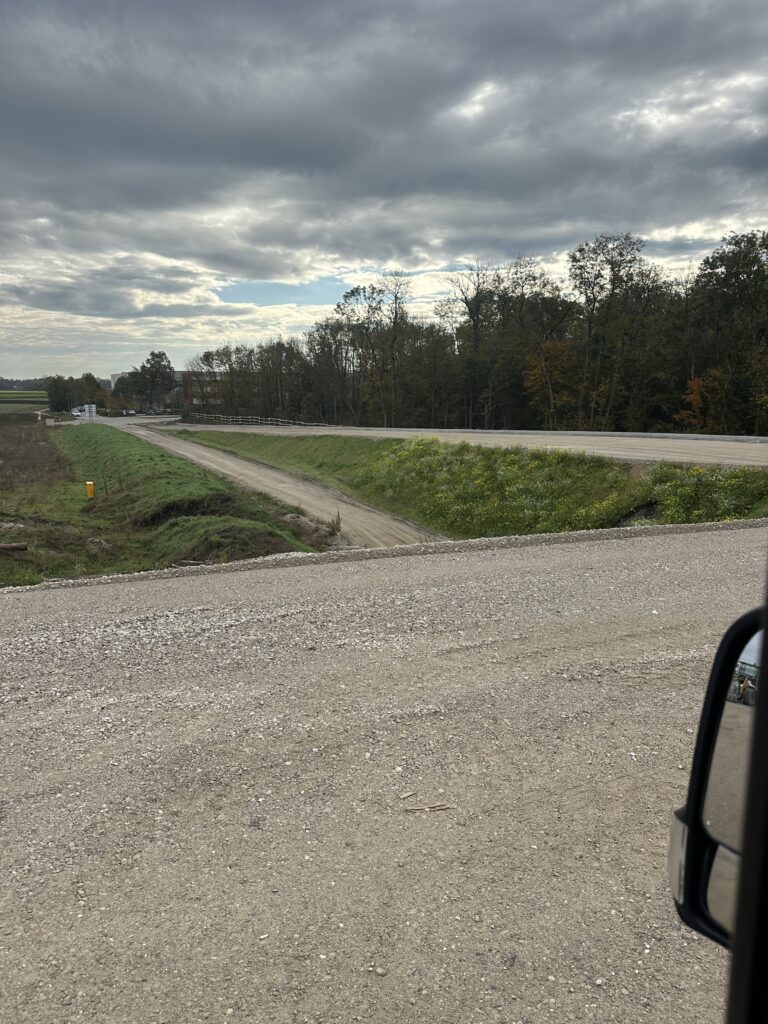
Stockpile areas, unpaved haulage roads, airfields, helipads, and wind energy access tracks share a critical operational requirement: particle emissions must be controlled, and surface integrity must be maintained without permanent paving. SRBT engineers stabilisation systems for both temporary and permanent applications.
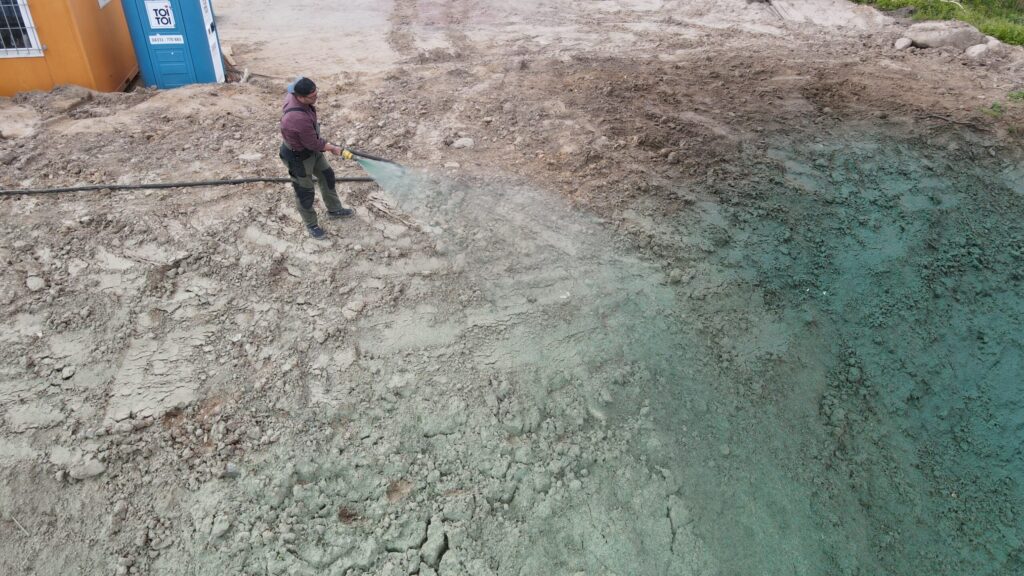
PM10 and PM2.5 emissions from unpaved surfaces affect equipment, worker health, and in aviation contexts, flight safety. Conventional water spraying is temporary and resource-intensive.
The engineering distinction is between temporary protection (re-wettable, biodegradable binders that can be reapplied after degradation) and permanent stabilisation (structural consolidation that withstands traffic loading).
Key Parameters:
Temporary vs. Permanent Protection: Re-wettable biopolymer binders for temporary dust suppression on active operational surfaces. Structural consolidation for permanent surface stabilisation under traffic loading.
Vegetation Establishment in Airfield and Helipad Approach Zones: FOD risk drives the specification — high-tack binder formulations for rapid surface fixation under turbine and rotor wash conditions.
Sand Fixation in Desert Helicopter Approach Zones: Particle fixation without vegetation — spray-based surface consolidants by BPS that penetrate the surface layer and resist rotor wash turbulence.
Dust control and surface stabilisation projects often require rapid mobilisation within operational constraints. SRBT coordinates system specification and application scheduling with site operations teams.